Your research deserves more than a privacy policy.
BioMed Advisor was architected from the ground up to protect your hypotheses, data, and IP at every layer. We address both surfaces of exposure: what AI providers can see, and what we ourselves store.
Most "private AI" tools only solve half the problem.
What commercial AI providers can see
Five architectural protections keep OpenAI, Anthropic, Google, and the rest from identifying your researchers, tracking your queries, retaining your documents, or piecing together what you are working on.
What we ourselves store
Your conversation history lives in your browser. Nowhere else. Not on a commercial AI provider's servers. Not in a BioMed Advisor database. There is no central archive of your research, because we never built one.
Five structural protections, working together.
Five architectural protections, working together. Not a privacy policy you have to take on faith. A structural position that commercial AI providers cannot occupy, because their business model requires the opposite.
No accounts. No API keys. No direct exposure.
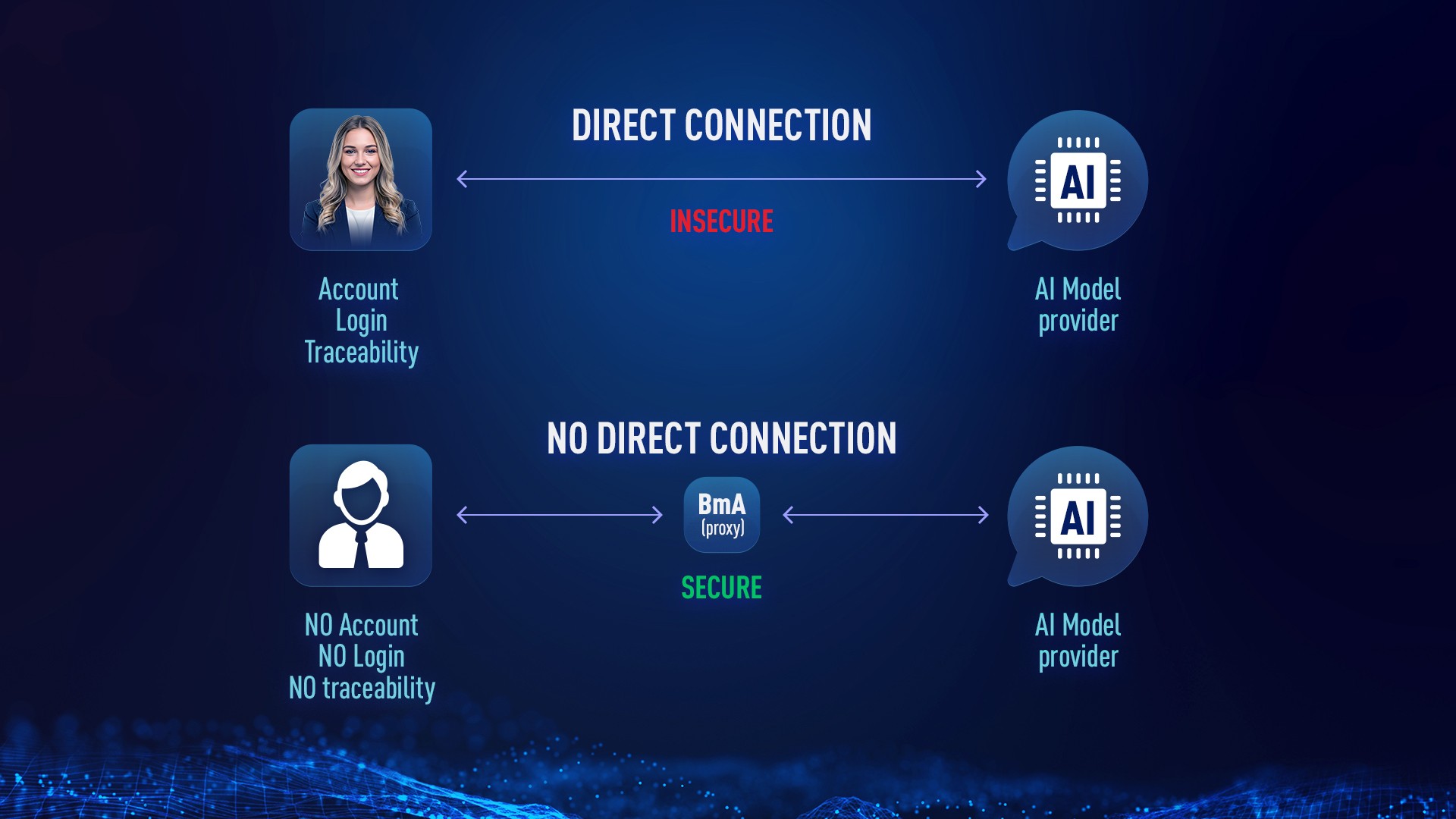
Every model call routes through BioMed Advisor. Researchers and institutions hold no accounts, manage no API keys, and maintain no direct relationship with OpenAI, Anthropic, Google, or any other provider.
To the AI provider, every request looks like it came from BioMed Advisor. Your users, your institution, and your queries stay invisible.
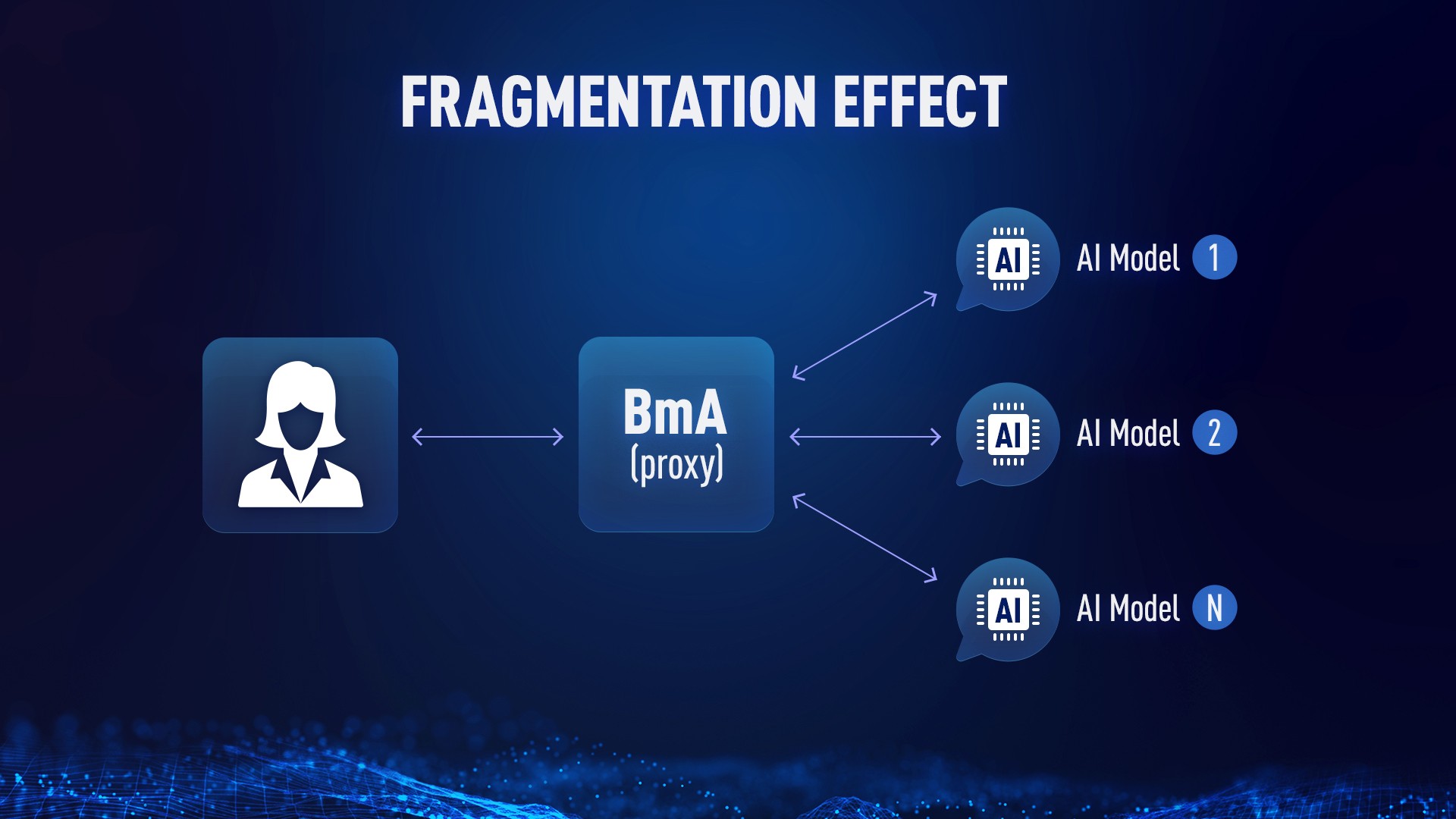
No single vendor ever sees the full picture.
Your queries are deliberately spread across multiple AI providers instead of concentrated with one vendor. Each provider sees only a fraction of your activity.
That makes vendor-side profiling of your researchers, your institution, or your research direction structurally difficult. No single vendor holds enough to assemble the picture.
Your queries are statistically lost in our traffic.
BioMed Advisor sends thousands of biomedical requests to AI providers every day, across hundreds of unrelated topics, from many institutions at once. Picking your specific institution, project, or question out of that stream is the kind of problem nobody bothers solving. Volume and diversity are the camouflage.
Sensitive documents are streamed, never persistently transferred.
PDFs and other sensitive documents are blocked from the FAST, PRIME, and DEEP modes by design. They can only be processed through the Secure Document Chat, where content streams to the model for the duration of the question and is never handed over for storage.
Draft proposals, pre-publication manuscripts, and proprietary methods cannot be retained by any provider, because they were never given to keep.
Operate in the legal jurisdiction your research demands.
BioMed Advisor can run as a private cloud in the jurisdiction your research demands. European Union. Canada. Selected Asian regions. Your queries originate where you choose, not from US infrastructure, which removes exposure to the US CLOUD Act and US discovery for international collaborations and IP-sensitive work.
The governing law of your AI usage matches the governing law of your institution. No accidents of geography. No imported jurisdictional risk.
Your chat history stays in your browser. Not in our database.
ChatGPT and tools like it build a central, persistent record of every conversation you have. Tied to your account. Synced across your devices. Indexed into the provider's database over time.
BioMed Advisor was built not to do any of that.
Centralized data collection on your research
- Conversations stored on provider servers, tied to your account
- History synced across every device you log into
- Every exchange about projects, hypotheses, targets, and IP-relevant ideas ends up in a central database
- Your scientific work and research strategy can be traced in detail over time
Local, in your browser, with the researcher
- No server-side AI database stores your chats
- History remains in the local storage of your browser only
- No global, account-wide chat history that maps your biomedical work into a provider database
- Sensitive research data, hypotheses, designs, and strategies remain under your control
Don't take our word for it. Run a simple test.
Open BioMed Advisor in Chrome. Have a conversation. Then sign in to BioMed Advisor in Edge, Firefox, or Opera with the same credentials.
Your earlier conversation will not be there. It cannot be there. There is no central database for the second browser to sync from. The history lives only in the browser that created it.
For researchers working with sensitive data, this is not a limitation: it is the architecture working as designed. Browser-local history means switching browsers or devices means starting fresh. The cost of cross-device convenience is a central database of your research. We chose not to pay that cost.
You choose how deep the reasoning goes.
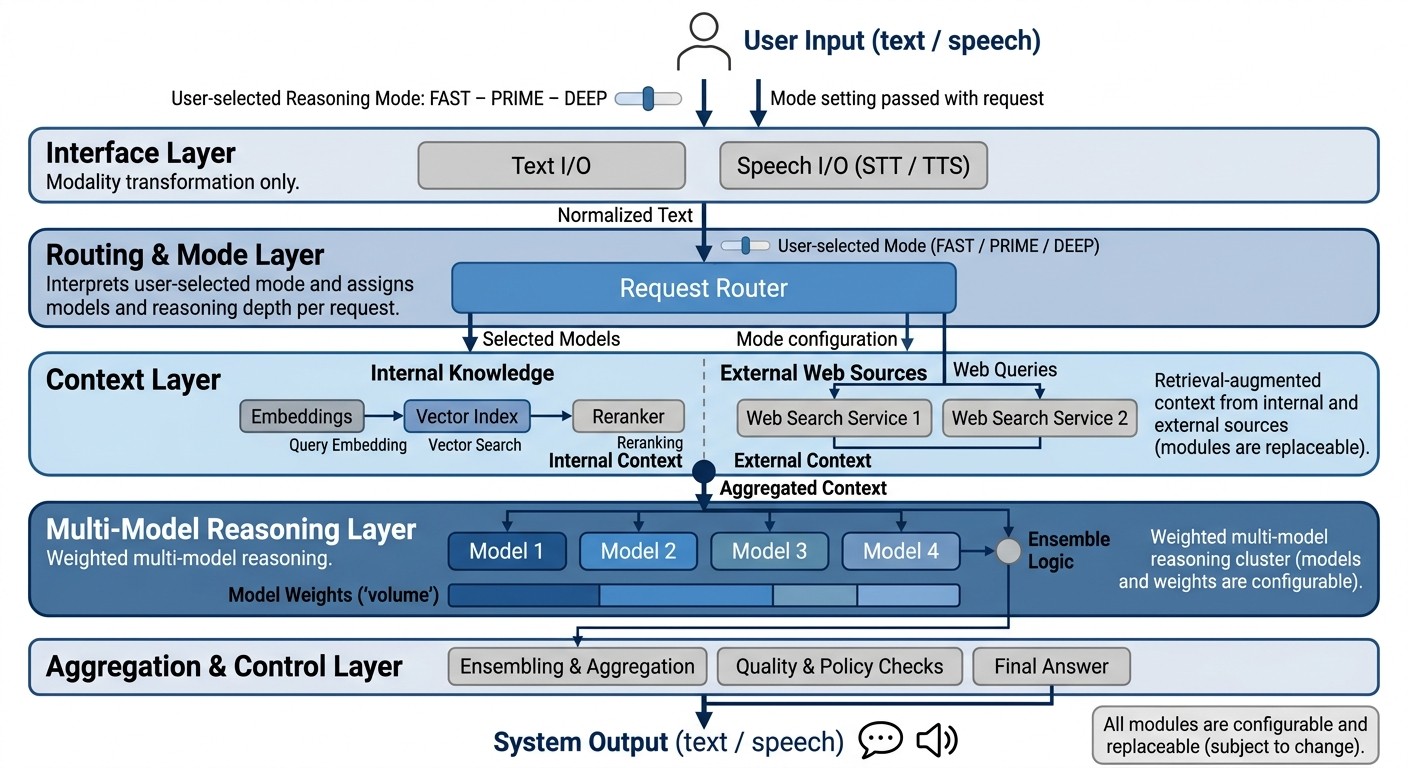
Three explicit modes route your request through different combinations of models. Every mode preserves the full sovereignty architecture above. The choice is depth and cost, not exposure.
Single-model routing for direct questions and quick lookups. Lowest latency. Lowest cost.
Multi-model ensemble with cross-verification and grounded retrieval. The default for serious research work.
Up to four reasoning models in parallel with weighted ensembling, ranked retrieval, and quality checks. For hypothesis generation and novel synthesis.
Query flow with grounded search
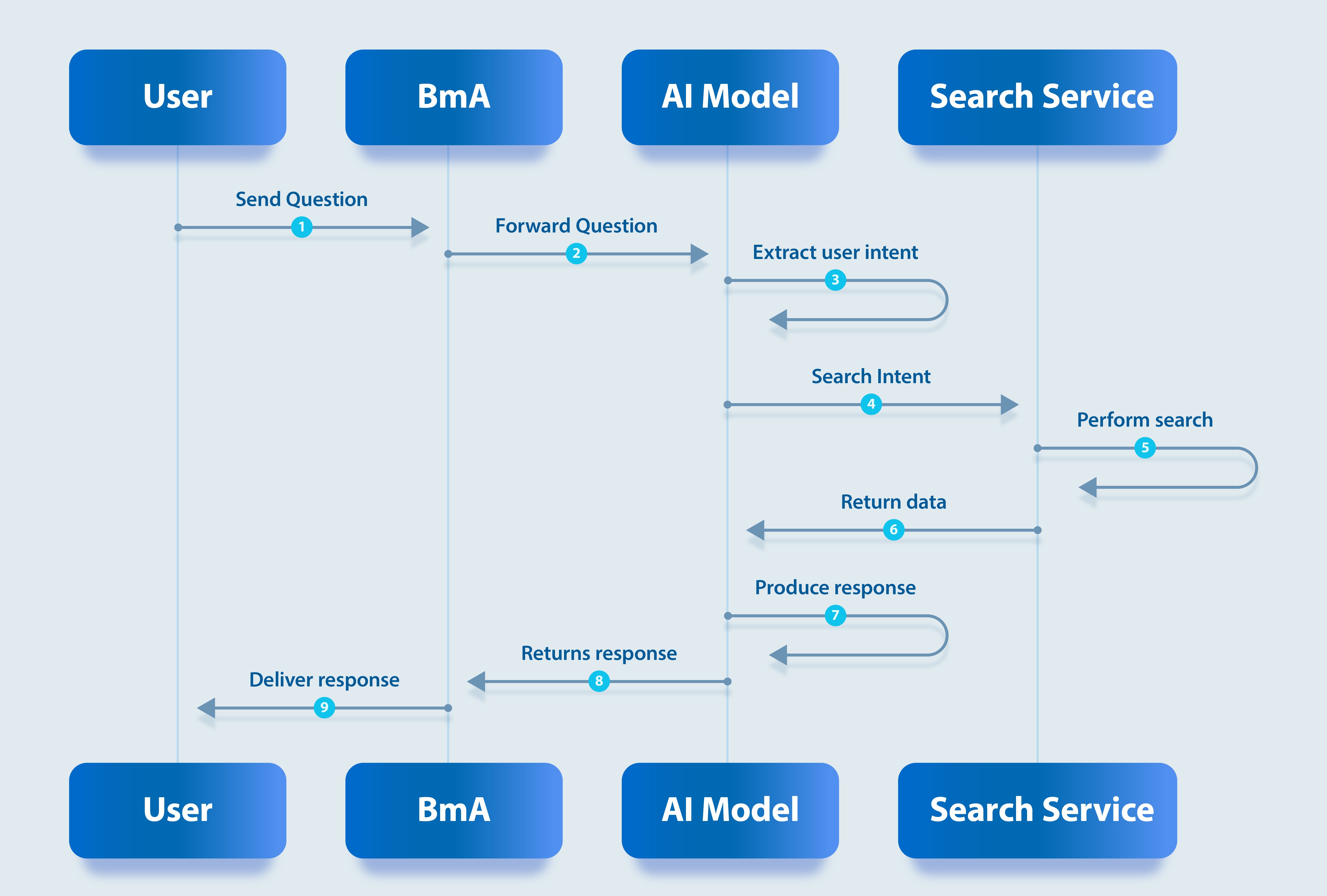
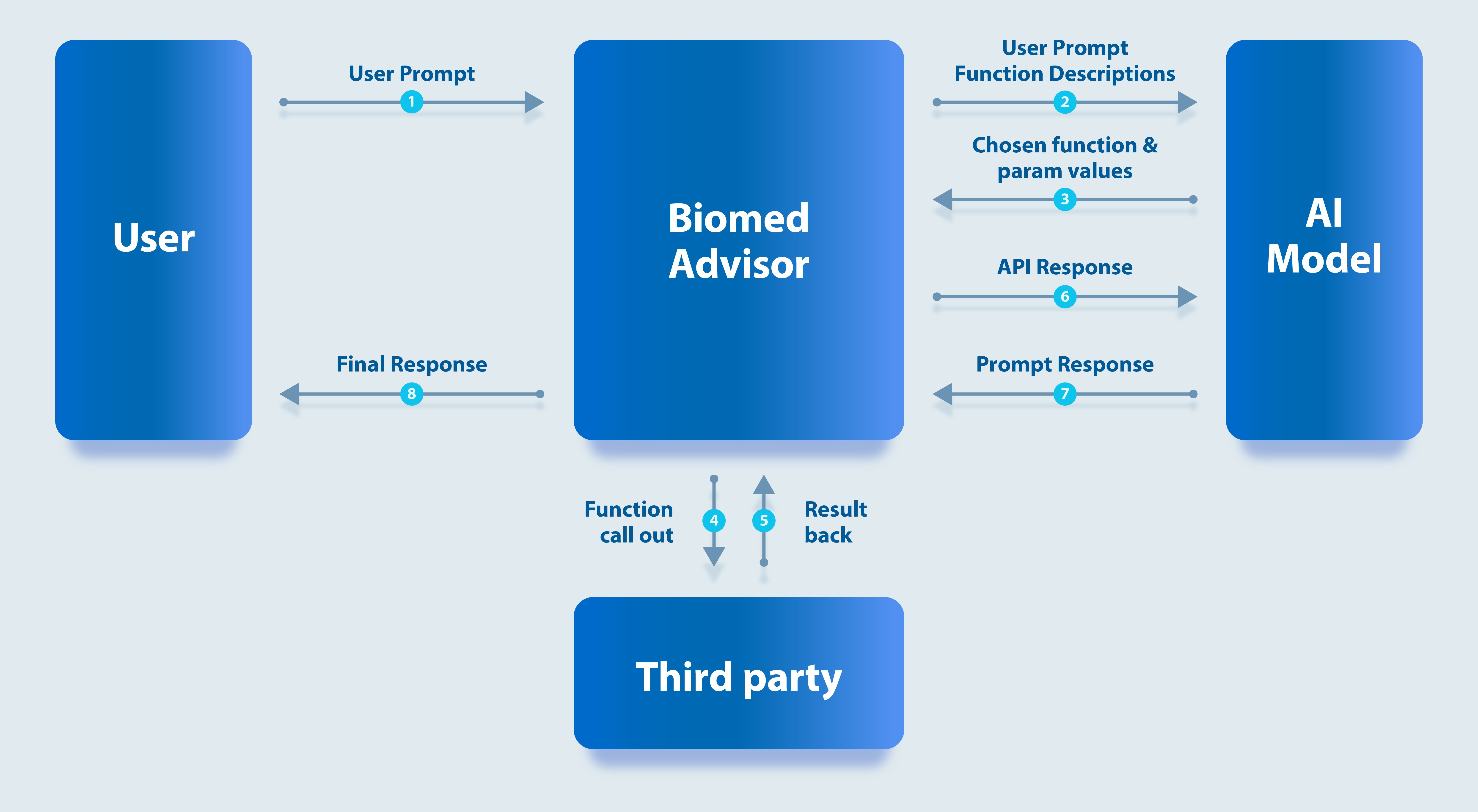
Function calling architecture
Compliance summary
No training on your data
Your queries, documents, and outputs are never used to train any AI model. Not by us. Not by the providers we route through.
No central chat database
Conversation history is held in browser local storage only. BioMed Advisor maintains no server-side archive of your conversations.
No third-party retention
AI providers do not retain identifiable content beyond the moments needed to return a response.
User identity masked from providers
AI providers see anonymous requests from BioMed Advisor infrastructure. Your institution and your users are not visible to them.
US LLC contracting entity
GRAU DATA LLC, registered in Sisters, Oregon, is the contracting entity for US customers. US law governs the agreement.
Jurisdictional choice available
Private cloud deployments in the EU, Canada, and selected Asian jurisdictions for institutions with sovereignty requirements.
Need full documentation for an RFP, a security questionnaire, or institutional review? We provide architectural and compliance materials directly to procurement and IT security teams.
Your data. Your control. Your jurisdiction.
Run a pilot on your own research. See the architecture in action with your institution's actual questions.